Dubai South Office Headquarters



Construction Management: Building the Foundation for Success
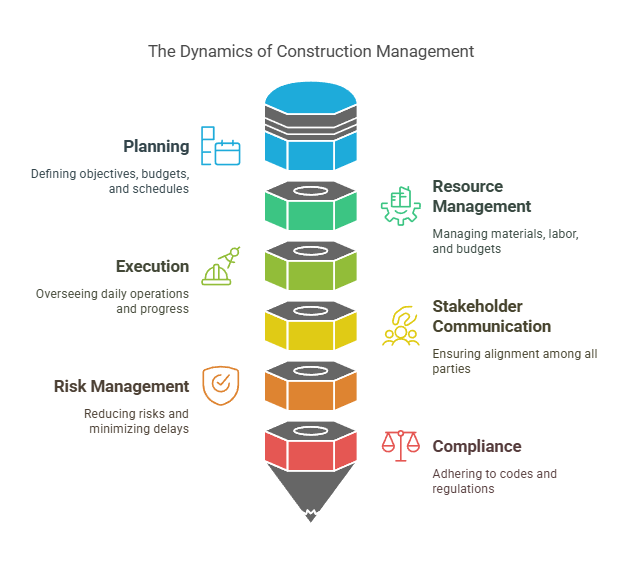
Construction management is the process of planning, coordinating, and overseeing construction projects to ensure they are completed on time, within budget, and to the required quality standards. It involves the management of resources, schedules, and teams, balancing the demands of design, engineering, and execution. Construction managers act as the central point of communication among stakeholders, including clients, architects, contractors, and suppliers, ensuring alignment on project goals and timelines.
A successful construction management process begins with meticulous project planning, which includes defining objectives, establishing budgets, and creating schedules. It also involves procurement of materials, hiring skilled labor, and ensuring compliance with building codes and regulations. During the execution phase, construction managers oversee the day-to-day operations, monitor progress, resolve issues, and ensure adherence to safety standards. Effective construction management requires a combination of technical expertise, leadership, and problem-solving skills to handle the complexities of large-scale projects.
By streamlining processes and maintaining transparency, construction management reduces risks, minimizes delays, and enhances project outcomes. It is a critical component of modern infrastructure development, ensuring that buildings and facilities meet the needs of communities while optimizing resources and sustainability.
Logistics Management: Optimizing the Flow of Goods and Services
Logistics management is the strategic coordination of the movement, storage, and delivery of goods and services from their point of origin to their destination. It is a crucial component of supply chain management, focusing on efficiency, cost-effectiveness, and customer satisfaction. Logistics managers oversee a wide range of activities, including transportation, warehousing, inventory control, and distribution, ensuring that goods reach the right place at the right time.
Effective logistics management begins with planning the most efficient routes, modes of transportation, and storage solutions. It involves tracking shipments, managing inventory levels, and addressing challenges such as delays, regulatory compliance, and cost fluctuations. Technology plays a significant role in logistics, with tools like GPS tracking, warehouse management systems, and predictive analytics enhancing visibility and decision-making.
By optimizing processes and leveraging technology, logistics management reduces operational costs, improves delivery times, and enhances supply chain resilience. In an increasingly interconnected world, where businesses compete on speed and reliability, logistics management is vital for meeting customer expectations and maintaining a competitive edge.